
Wholesale Acacia Wood Cutting Boards
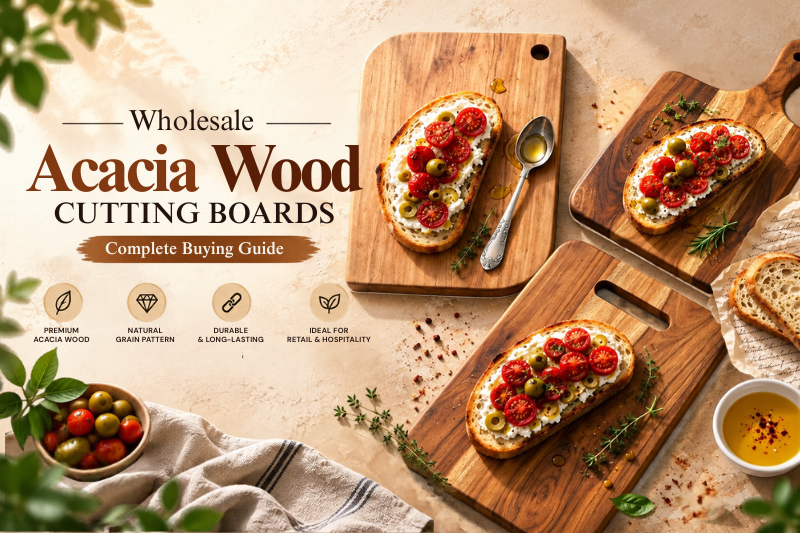
Wholesale Acacia Wood Cutting Boards
Choosing the right cutting boards is an important decision for retailers, restaurant suppliers, kitchenware brands, and hospitality businesses. When purchasing in large quantities, buyers need to consider more than appearance. Product quality, dimensions, finishing, packaging, supplier reliability, and total landed cost all influence the value of an order.
Wholesale acacia wood cutting boards are worth considering for businesses looking for wooden kitchenware with distinctive grain patterns and practical everyday functionality. However, selecting the right product requires careful evaluation of specifications and manufacturing quality.
This guide explains how to choose an acacia wood cutting board, compare bulk purchasing options, evaluate suppliers, and make more informed wholesale buying decisions.
Why Choose Acacia Wood Cutting Boards?
Acacia is a hardwood commonly used in kitchenware, serving boards, and home accessories. Its natural grain patterns and varied warm tones make it attractive to customers who prefer wooden kitchen products.
Key benefits include:
-
Distinctive appearance: Natural grain variation gives each board an individual look.
-
Hardwood construction: Properly selected and manufactured acacia can provide a durable surface for everyday kitchen tasks.
-
Versatile applications: Boards can be used for food preparation, serving, and presentation, depending on their design.
-
Retail appeal: Wooden kitchen accessories can complement modern, rustic, and traditional kitchen styles.
-
Product variety: Different sizes, shapes, and finishes allow businesses to serve multiple customer segments.
Actual performance depends on the wood quality, board construction, thickness, finishing, and maintenance. Buyers should assess the finished product rather than relying on the wood species alone.
Types of Wholesale Acacia Cutting Boards
Before placing a bulk order, determine which styles suit your customers and intended use.
1. Standard Cutting Boards
Standard rectangular boards are suitable for everyday chopping and food preparation. Retailers may prefer several size options to accommodate different kitchen requirements.
2. Large Chopping Boards
Larger boards provide additional working space and may suit customers who prepare meals frequently. Buyers should check thickness, weight, stability, and storage requirements before ordering.
3. Serving and Charcuterie Boards
Decorative acacia boards can be marketed for serving cheese, bread, snacks, and other foods. Features such as handles, shaped edges, and attractive grain patterns may appeal to gift and homeware shoppers.
4. Custom and Private-Label Boards
Businesses developing their own kitchenware ranges may explore custom dimensions, branding, packaging, or engraving. Confirm customization costs, minimum order quantities, production timelines, and sample approval requirements before committing.
How to Evaluate Acacia Cutting Board Quality
Product quality should be a priority when comparing bulk acacia cutting boards. A low purchase price may not represent good value if products arrive damaged, vary significantly, or fail to meet customer expectations.
Wood Quality and Construction
Inspect the grain, surface consistency, and overall construction. Check for visible cracks, loose joints, excessive roughness, and other defects. For laminated or joined boards, examine the joints and confirm that the construction meets the intended use.
Natural grain and colour differences are expected in wood products. Establish acceptable variation standards with the supplier before production.
Dimensions and Thickness
Confirm the board's length, width, thickness, and weight. Request measurements in writing and ensure the delivered products match the approved sample and product listing.
Consistent dimensions are especially important for retail packaging, warehouse storage, and product photography.
Surface Finish and Food Contact
Check that the board is smoothly finished and suitable for its intended food-contact use. Ask the supplier to identify the finish or oil used and provide relevant product-safety documentation where applicable.
Do not assume that every coating or treatment is suitable for food-contact applications simply because the product is made from wood.
Packaging and Shipping Protection
Wooden boards can be scratched, chipped, or damaged during transport. Ask how each board will be protected, whether individual packaging is available, and how cartons are prepared for bulk shipments.
Request clear procedures for handling defective or damaged items.
How to Choose the Right Acacia Cutting Board Supplier
Finding a reliable acacia cutting board supplier involves comparing product quality, communication, production capacity, and delivery terms—not just the quoted price.
Use these criteria when evaluating suppliers:
| Evaluation factor | What to verify |
|---|---|
| Product samples | Inspect a sample before bulk approval |
| Specifications | Confirm wood, dimensions, thickness, and finish |
| Minimum order quantity | Check MOQ and quantity-based pricing |
| Customization | Confirm branding, engraving, and packaging options |
| Quality control | Ask about inspection standards and defect handling |
| Delivery | Confirm lead times, shipping terms, and packaging |
| Documentation | Request relevant product and material information |
For larger orders, document the agreed specifications, acceptable tolerances, inspection process, and replacement terms in writing.
Understanding Wholesale Acacia Cutting Board Pricing
The cost of wholesale acacia cutting boards varies according to size, thickness, construction, finish, order quantity, customization, packaging, and shipping distance.
Before confirming an order, ask suppliers about:
-
Price breaks for different quantities
-
Sample and tooling charges
-
Custom branding and packaging fees
-
Shipping, insurance, duties, and taxes where applicable
-
Payment terms and production deposits
-
Policies for damaged or defective products
A clear cost comparison helps businesses assess potential margins and avoid unexpected expenses.
Wholesale Buying Checklist
Use this checklist before purchasing bulk acacia cutting boards:
-
Define your target customers and intended product use.
-
Select suitable sizes, shapes, and thicknesses.
-
Request samples and approve the final specifications.
-
Confirm the finish and food-contact suitability.
-
Establish acceptable natural wood variation and defect tolerances.
-
Verify the minimum order quantity and production timeline.
-
Calculate the total landed cost per sellable board.
-
Confirm packaging, shipping, and damage-claim procedures.
-
Agree on inspection standards and replacement terms.
-
Approve any custom branding or private-label artwork before production.
Completing these steps can help reduce avoidable purchasing issues and improve consistency across repeat orders.
How to Care for Acacia Wood Cutting Boards
Proper maintenance can help extend a wooden cutting board's useful life. Care instructions should be supplied with the product so customers understand how to clean and store it.
General recommendations include:
-
Wash the board after use with hot, soapy water and rinse it thoroughly.
-
Avoid prolonged soaking and do not leave the board sitting in water.
-
Dry both sides and allow the board to air-dry completely.
-
Follow the manufacturer's instructions for any suitable conditioning oil.
-
Avoid cleaning methods that may damage the wood or finish.
-
Use separate cutting boards for raw meat and ready-to-eat foods to reduce cross-contamination risks.
Frequently Asked Questions
Where can businesses buy wholesale acacia wood cutting boards?
Businesses can approach kitchenware manufacturers, established wholesalers, and suppliers offering bulk wooden products. Compare samples, written specifications, minimum order quantities, and delivered costs before selecting a supplier.
What is the minimum order quantity for wholesale cutting boards?
The minimum order quantity varies by supplier, product design, and customization requirements. Confirm the MOQ for standard products separately from custom or private-label orders.
Can wholesale acacia cutting boards be customized?
Some suppliers offer custom sizes, engraving, logos, and packaging. Availability, setup fees, production time, and minimum quantities should be confirmed before ordering.
How should buyers compare bulk cutting board prices?
Compare the same dimensions, thickness, construction, finish, packaging, and order quantity. Include freight, duties, taxes, and expected defects where relevant to calculate a more realistic landed cost.
What should buyers inspect before approving a bulk order?
Inspect surface quality, dimensions, construction, finish, packaging, and consistency with the approved sample. Agree on acceptable tolerances and defect-handling procedures before production begins.
Conclusion
Choosing the right acacia wood cutting board for wholesale purchasing requires a balance of quality, cost, product design, and supplier reliability. Businesses should evaluate samples, confirm specifications, compare landed costs, and establish clear quality-control expectations before placing large orders.
Whether you supply retailers, restaurants, hospitality businesses, or a private-label kitchenware brand, a structured buying process can help you make better purchasing decisions and build a more consistent product range.
