
No. 1 Guide to Buying a Wooden Chopping Board
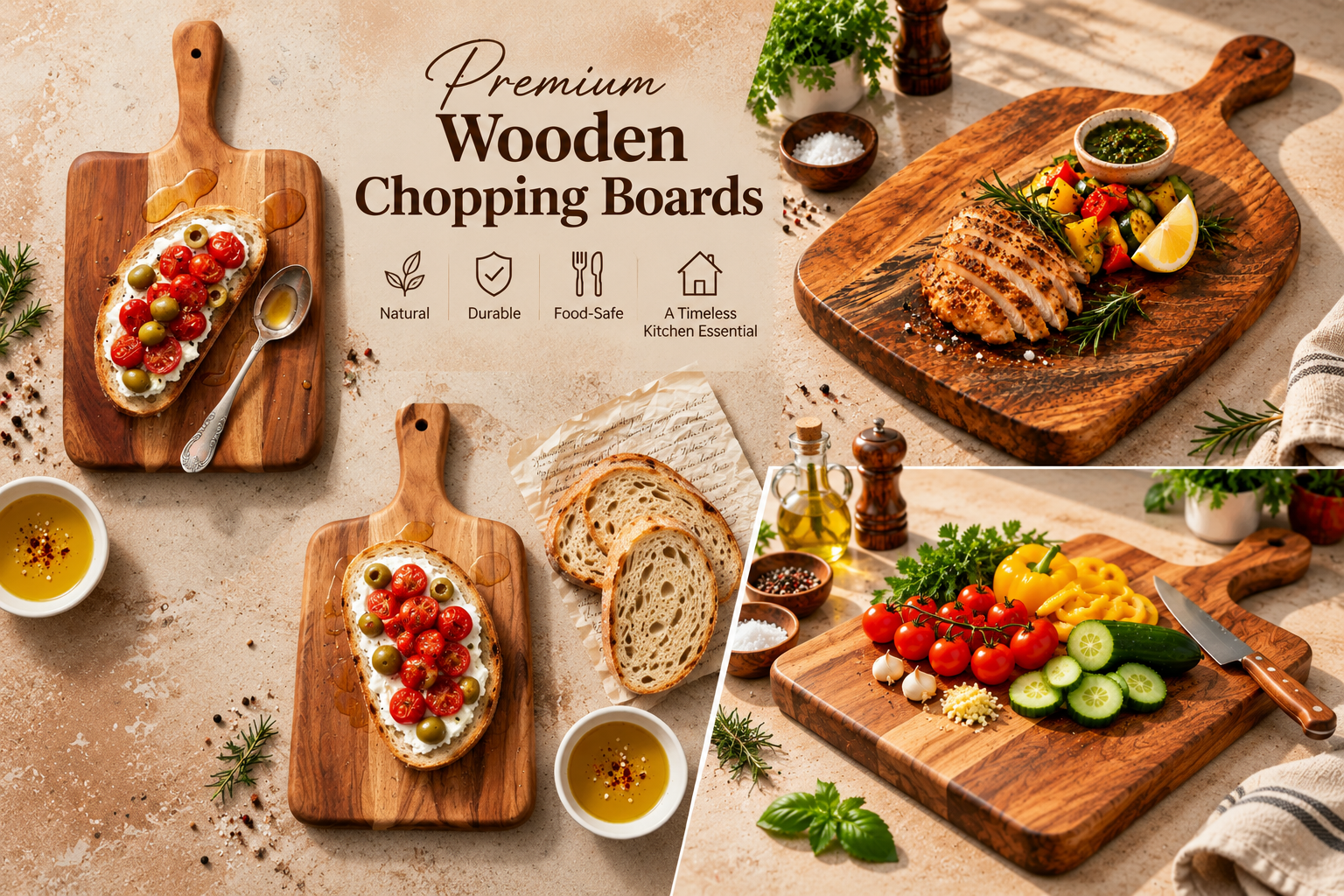
A chopping board is one of the most frequently used tools in any kitchen, so choosing the right one matters. A premium wooden chopping board combines natural beauty with a practical surface for preparing vegetables, fruits, herbs, bread, and other ingredients. But differences in wood type, construction, thickness, and finish can affect how a board performs over time.
If you plan to buy a wooden chopping board, it is worth looking beyond appearance and price. The right board should fit your cooking habits, available kitchen space, cleaning routine, and budget.
This wooden cutting board buying guide explains the key features to compare before purchasing a board for everyday use or as a premium kitchen accessory.
1. Choose the Right Wood Type
Wood species influence a chopping board's appearance, grain, hardness, and maintenance requirements. Maple, walnut, and teak are popular choices, but each offers a different combination of practical and aesthetic qualities.
| Wood type | Main characteristics | Best suited for |
|---|---|---|
| Maple | Fine, relatively close grain and a light appearance | Everyday food preparation |
| Walnut | Rich brown colour and distinctive grain | Premium kitchens and serving |
| Teak | Golden-brown colour and naturally oily wood | Buyers who appreciate its appearance and properties |
When comparing the best wooden chopping board to buy, consider the quality of the finished product rather than assuming one wood is always superior. Proper drying, construction, surface finishing, and care all influence performance.
Look for clear information about the wood species and avoid boards with unexplained materials or finishes.
2. Understand Edge-Grain and End-Grain Construction
The way wood pieces are arranged can affect a board's appearance, price, weight, and cutting experience.
Edge-Grain Chopping Boards
Edge-grain boards are constructed with the long edges of wood strips facing the cutting surface. They usually have a clean, linear grain pattern and can be a practical option for regular household cooking.
If you want a durable wooden chopping board for chopping vegetables, preparing fruit, and completing everyday kitchen tasks, a well-made edge-grain board may offer an excellent balance of practicality and value.
End-Grain Chopping Boards
End-grain boards expose the ends of the wood fibres on the cutting surface. They often feature a distinctive block or checkerboard pattern and are commonly made thicker than basic boards.
A premium end-grain chopping board may appeal to frequent cooks who prefer a substantial cutting surface and are comfortable with its weight and maintenance requirements. However, quality depends on sound construction, secure joints, suitable adhesives, and proper care.
Neither construction is automatically best for every kitchen. Choose according to your intended use and budget.
3. Check Thickness, Weight, and Stability
Thickness affects how substantial a board feels and how easily it can be moved or stored. A thicker board may provide a stable cutting surface, but it can also be heavier and take up more storage space.
Before buying, check:
-
Thickness: Choose a board that suits your typical food preparation.
-
Weight: Make sure you can lift, clean, and store it comfortably.
-
Stability: The board should sit securely on a flat worktop.
-
Surface quality: Look for smooth finishing, secure joints, and no loose pieces.
A heavy-duty wooden cutting board should feel sturdy and well constructed without becoming inconvenient for everyday use.
4. Select a Size That Fits Your Kitchen
The right size depends on what you prepare and how much counter space you have.
-
Small boards: Convenient for fruit, herbs, lemons, and quick tasks.
-
Medium boards: A versatile choice for everyday household cooking.
-
Large boards: Provide more space for chopping several ingredients.
-
Extra-large boards: Useful in spacious kitchens or for larger preparation tasks.
Before ordering a premium chopping board online, measure your available worktop and storage area. Check the listed dimensions rather than judging size from product photographs alone.
A board should provide enough room to chop comfortably while remaining easy to handle and clean.
5. Prioritise Food Safety and Materials
A food-safe wooden chopping board should have a suitable cutting surface, sound construction, and a finish intended for food-contact use.
Check these details before purchasing:
-
The wood species is clearly identified.
-
The cutting surface is smooth and free from splinters.
-
Laminated boards use adhesives suitable for their intended food-contact application.
-
Any oil, wax, or coating is identified as appropriate for food-contact surfaces.
-
The board has no deep cracks, loose joints, or damaged areas.
Wooden boards can be used safely when they are properly maintained. The US Department of Agriculture recommends washing cutting boards with hot, soapy water after use and using separate boards for fresh produce and raw meat, poultry, or seafood when possible.
A premium appearance should never replace clear material information and proper food-handling practices.
6. Examine the Finish and Surface Quality
The finish helps determine how the board looks and how it should be maintained. Many wooden chopping boards use food-grade mineral oil or a suitable board conditioner to help prevent the wood from drying out.
When evaluating a high-quality wooden chopping board, look for a smooth, even finish and clear care instructions. Avoid products with peeling coatings, unexplained chemical finishes, or strong persistent odours.
Ask the seller whether the board needs regular conditioning and which products are recommended. Ordinary cooking oils such as olive oil may become sticky or rancid, so a suitable board-care product is generally preferable.
7. Compare Price with Overall Quality
The most expensive board is not necessarily the best purchase. A higher price may reflect larger dimensions, thicker construction, more complex craftsmanship, or a premium wood species.
Before deciding to buy a premium wooden chopping board online, compare the following:
| Buying factor | What to check |
|---|---|
| Wood | Species and material description |
| Construction | Edge-grain or end-grain design |
| Dimensions | Length, width, and thickness |
| Finish | Food-contact suitability and care instructions |
| Craftsmanship | Smooth edges, stable surface, and secure joints |
| Value | Price compared with materials and construction |
| After-sales support | Return policy, warranty, and seller information |
Read customer reviews carefully and look for useful details about the board's actual size, weight, finish, and maintenance needs.
8. Consider Practical Features and Design
A wooden chopping board can be a functional kitchen tool as well as an attractive accessory. Natural grain patterns and warm colours can complement a wide range of kitchen interiors.
Depending on your needs, useful features may include:
-
Integrated handles for easier lifting.
-
Juice grooves to help contain liquid from certain foods.
-
Reversible surfaces for different preparation tasks.
-
Non-slip support or a stable base.
-
A design that is easy to clean and store.
A premium wooden chopping board for the kitchen should balance appearance with practical usability. Choose features that genuinely suit your routine rather than paying extra for details you are unlikely to use.
9. Learn How to Maintain Your Chopping Board
Good maintenance helps preserve the board's surface and condition.
To care for a long-lasting wooden cutting board:
-
Wash it after use with warm water and dish soap.
-
Rinse away food residue and dry it promptly with a clean towel.
-
Avoid prolonged soaking and follow the manufacturer's dishwasher guidance.
-
Store it in a clean, ventilated place so both sides can dry fully.
-
Apply a suitable food-grade board oil or conditioner when recommended.
-
Replace the board, or have it professionally resurfaced when appropriate, if deep grooves or cracks make it difficult to clean effectively.
Use separate boards for raw animal products and ready-to-eat foods whenever possible. Clean the board thoroughly between different food-preparation tasks to reduce cross-contamination risks.10. Which Wooden Chopping Board Should You Buy?
Frequently Asked Questions
What is the best wood for a wooden chopping board?
Maple, walnut, and teak are popular choices. The best option depends on your preferred appearance, the board's construction, its intended use, and the manufacturer's quality standards.
Are wooden chopping boards food-safe?
They can be used safely when properly constructed, cleaned, dried, and maintained. Choose a board in good condition and follow appropriate food-handling practices.
Is end-grain better than edge-grain?
Not for every buyer. End-grain boards often have a distinctive appearance and substantial construction, while edge-grain boards can be practical for everyday use. Compare quality, price, weight, and maintenance needs.
What should I check before buying a premium chopping board online?
Check the wood species, dimensions, construction, food-safe finish, care instructions, customer reviews, return policy, and seller information.
How can I make my wooden chopping board last longer?
Clean it after use, dry it promptly, avoid prolonged soaking, condition it when recommended, and replace it if deep cracks or grooves prevent effective cleaning.
Conclusion
Choosing a premium wooden chopping board involves more than selecting an attractive piece of wood. Material quality, construction, dimensions, finish, food safety, and maintenance all matter.
Before you buy a wooden chopping board, compare these factors and choose a product that fits your cooking habits and kitchen space. A carefully selected, well-maintained board can be a useful and attractive part of your kitchen for years to come.
